Exhibit Planning
Four Key Concepts In Training Your Exhibit Staff
Just because sales reps are effective in the field doesn't mean they already have the mindset and skills that will make them effective in the exhibit. According to Exhibitor magazine, your representatives need to understand that selling and exhibiting differ in four main areas: intent, planning, execution and outcome.
Intent: Unlike a field sales call, the intent of exhibiting is to be an effective selling tool. Exhibit staff should focus on opening opportunities for closing sales, rather than going through the entire sales process on the spot.
Planning: Because a sales call is lengthy and focused, it can be driven by the client's objectives. A client discussion on the trade show floor should be driven by your objectives.
Execution: The goal in an exhibit is to get the attendee's attention, rather than on getting an appointment. Your booth staff should take a time-rationed approach to sales, rather than employing their arsenal of full-sale field tactics.
Outcome: A name and number isn't enough. A properly trained exhibit staff will deliver useful sales information that includes specific details about a prospect's needs, budget and time frame for purchasing.
Plan For Comfort - All Feet Equal
All Feet are Equal on the Show floor ... they all hurt
It is a known fact that everyone's feet hurt on the tradeshow floor - exhibitors and attendees alike. Think about double padding the carpet in your booth - and never consider not padding or using carpet alone. Tired feet know a good thing when they feel it, and this "feel good" message is telegraphed to the mind. The message - let's stay awhile here! Try it at your next show. It works - not only for prospects, but also as a bonus for your booth staff!
Articles furnished, courtesy of Absolute Exhibits. Please contact David Tzeng at dtzeng@AbsoluteExhibits.com or 888-706-6555
ext. 107
Booth Design Basics
You Can't Score Without A Goal
What does your company expect to happen when you exhibit at a trade show? Many exhibit managers say their bosses just seem to want them to "fly the corporate colors," and are likely to choose a trade show booth design based on pretty pictures.
But without objectives, you may be inclined to toss your booth prematurely when something slicker and prettier comes along.
So how do you start determining your goals? Booth design companies say objectives should not be limited to one or two items. They should cover anything and everything that will impact success. Here's a list of the kinds of questions you should take into consideration:
- How many sales leads do we want?
- How many orders do we hope to take at the show?
- How many visitors do we expect over the run of the show?
- How many people do we want to be able to comfortably gather in our booth at one time?
- How much space will we need for demos?
- Do we need defined spaces where sales people and booth staff can talk with prospects? Do we need sit down conference space?
- How much storage space will we need?
- What kind of lighting will best emphasize products and our brand?
- Do we have established font types and sizes we want to use?
- Have our other marketing efforts (i.e. web site, brochures, etc.) defined our brand? If so, how can we use the booth to build our brand?
If you're a smaller company that's more production-driven than marketing-driven, resolving overall marketing/branding questions may be Job 1 before you approach an exhibit design company. Advance preparation and goal setting will help you look beyond pretty pictures to make sure form meets function in your new booth design.
Unbreakable Rules
Breaking the rules - it really never pays.
In my tradeshow life I have read a minimum of 150 exhibitor's manuals and I can safely say that no two shows have ever had exactly the same rules. If you don't get to know your show rules, and unintentionally break them, show management may make you change your exhibit at the last minute, fine you, or even bar you from exhibiting. On the other hand, if for example your exhibit does not meet the exact show rules as set by show management and you are aware of this situation in advance - most show management companies will work with you and give you some leeway with written permission for compromises on the show floor.
Don't look for compromise when it comes to installing your
exhibit.
Read the rules and know that if you are in a union hall - those are the rules. This is not a show management issue - this is a union issue and there is no getting around union rules and regulations. Another example - how many clients have I experienced that refuse to order electricity for their small booth, figuring they will just tap into their neighbor? This just does not work - and you will sit in the dark in your 10' inline booth and watch attendees pass you by all day. All for $100 - and what did you pay to be on the show floor?
To some people it is all about the game and what you can get away with on the show floor.
However, no matter who you are you have spent a considerable amount of your marketing budget to be at that show and gambling on saving a few dollars could cost you hundreds if not thousands in lost opportunities.
Articles furnished, courtesy of Absolute Exhibits. Please contact David Tzeng at dtzeng@AbsoluteExhibits.com or 888-706-6555 ext. 107
Electricity Does Not Come Cheap!
Take into account having available a fully stocked electrical gang box - a few dollars at home can save hundreds on the show floor.
Believe me, stocking your entire electrical box will be less expensive than renting one T-plug at the convention center. Make your local Home Depot man your friend - bring extension cords, power strips, electrical tape, an xacto knife, pliers, screwdrivers, extra light bulbs, cable ties and fishing line.
Articles furnished, courtesy of Absolute Exhibits. Please contact David Tzeng at dtzeng@AbsoluteExhibits.com or 888-706-6555
ext. 107
Lighting Necessities - No Lights No Notice
Most exhibitors do not recognize that convention hall lighting barely reaches the top of their exhibit.
If your exhibit is not lit properly, let's face it, no one will notice it. Lighting will add depth and excitement to your exhibit while capturing attendee attention. Having just attended two tradeshow industry related shows, Exhibitor Show and GlobalShop, where the exhibitors should be savvy, I was truly amazed at how many exhibits were either improperly lit - or not lit at all. Here are a few lighting tips:
1. Use accent lighting to define the areas of importance in your exhibit with well directed lighting.
2. If you are in a larger booth space consider having the overhead exhibit hall lighting turned off and provide your own lighting effects, rather than competing with the ambient light from above. Yes, they do charge you not to have lights!
3. Use backlighted graphics - those are the ones that really stand out on the show floor.
4. As well as you have thought out every nuance of your exhibit design - be certain that your lighting effects bring out its drama.
5. Small exhibits do not have to suffer a disappearing act - lighting coming from two or three directions can give even a small exhibit a "dimensional quality".
6. Motion attracts attention and moving lights grab interest quickly and economically.
Articles furnished, courtesy of Absolute Exhibits. Please contact David Tzeng at dtzeng@AbsoluteExhibits.com or 888-706-6555
ext. 107
Overloaded Exhibits
Overloaded Exhibits Chase the Crowd Away!
Is your booth space a retail store - or are you trying to bring your new product to the marketplace? Don't overshadow your true message with copious amounts of old products. Your booth space is an exhibit, not a catalog. Your goal should be to open a conversation with your targeted attendees about your company's product or service. You don't have to exhibit your company's entire product line.
Articles furnished, courtesy of Absolute Exhibits. Please contact David Tzeng at dtzeng@AbsoluteExhibits.com or 888-706-6555 ext. 107
Save Paperwork
You Must Carry Show Paperwork to the Show Floor
Realizing that your show paperwork now takes a full file drawer in your office, you must weed through and gather only the most critical papers to have at the show.
Bring your exhibitor's manual - to back up your claims that you do know the show rules and your booth space contract along with your proof of payment. Any paperwork that you have received granting special permission issues on the show floor and all of your service order forms must be with you.
Duplicate copies of set-up drawings and photos of your exhibit should be considered, along with phone numbers and emergency phone numbers for your shipping company, exhibit house, and I&D company. It's a little bit much to lug around - but if you need any part of it this will save you hours of frustration.
Articles furnished, courtesy of Absolute Exhibits. Please contact David Tzeng at dtzeng@absoluteExhibits.com or 888-706-6555 ext. 107
Lean Exhibiting: 29 Ways to Get More Bang for Your Tradeshow Buck
By Jefferson Davis, Competitive Edge
When you compare the cost of putting a rep face-to-face with a customer or prospect in the field to the cost at a tradeshow, even in this economy, tradeshows are a still an extremely cost-effective channel. That being said, many exhibit managers are under pressure to do more with less. Below is a collection of 29 cost-savings practices in a checklist format. Cross out the ones you are using, put a checkmark by the ones you plan to use, and plan now to get more bang for your tradeshow buck.
- Reuse, refurbish or extend the life of your exhibit
- Evaluate renting versus owning your exhibit – you can save a lot here
- Replace your exhibit with a lighter weight, easier to install and dismantle your exhibit
- Get distribution channel partners to invest in the show with you
- Take advantage of all show vendor deadlines and discounts
- Negotiate everything
- Book travel early
- Consolidate freight shipments
- Avoid rush charges by planning ahead
- Ship to the advance warehouse
- Ship small, lightweight, carry in items to the hotel
- Store exhibit properties in your most exhibited show city
- Negotiate volume shipping/freight contracts – go out to bid
- Buy reusable crates
- Have freight reweighed before return shipping
- Right size your exhibit - a complex topic - call me at 800-700-6174
- Evaluate the viability of a virtual product presentation
- Send less people – only those who need to be there
- Bring your own cleaning supplies
- Bring your own trash cans and liners
- Bring your own cordless vacuum
- Bring your own surge suppressor power strips and flat extension cords
- Send less literature – print on demand
- Create a roommate lodging program
- Dine with pre-set meals
- Save money on giveaways by using them properly
- Be sure all leads are followed up
- Audit your post-show bills
- Measure and report savings and ROI and you may not have to reduce costs after all
Jefferson Davis, president of Competitive Edge is known as the “Tradeshow Turnaround Artist".
Since 1991, his consulting and training services have helped clients improve their tradeshow performance and results. Mr. Davis is a featured presenter at the ShowPro Tradeshow Workshop. He can be reached at 704-814-7355 or Jefferson@tradeshowturnaround.com.
Green Exhibiting: 23 Ways to Create a More Environmentally Friendly Exhibit Program
By Jefferson Davis, Competitive Edge
We know that the face-to-face contact created by tradeshows is absolutely vital to the success of commerce. But did you know that the average tradeshow releases hundreds or thousands of metric tons of CO2 in the atmosphere?
With these two facts in mind, we all need to take a closer look at how we can create greener exhibit programs. Greening our exhibit programs is not just good for our environment, it’s also good for our corporate identity and it may even help us win more business. Did you know that some corporations are now giving purchasing preference to companies with green business practices? As you can see we all have a lot to gain from greener exhibiting.
Below is a collection of 23 strategies for executing a greener exhibit program. Cross out the ones you are already using, put a checkmark by the ones you plan to use, and get busy now on creating a greener exhibit program.
- Reuse, refurbish or extend the life of your current exhibit
- Consider renting versus buying your next exhibit to reduce material use and transportation emissions
- Choose and use recycled materials whenever and wherever possible
- Recycle as much as you possibly can to help avoid landfills
- Label leftover products for donation
- Reduce the weight of your exhibit and everything you send to the show
- Buy locally and store locally
- Print literature at the destination or on demand in your exhibit versus shipping and throwing it away
- Print on at least 30% post-consumer recycled paper
- Use vegetable or soy based inks for printing
- Choose eco-friendly giveaways
- Avoid PVC it takes 100 years to decompose and releases a lot of VOC’s
- Choose wood from Forestry Stewardship Council certified forests
- Consider replacing wood with Plyboo - it renews 5 to 10x faster than trees
- Replace fluorescent, incandescent and halogen lights with LED’s
- Use water based paints and finishes
- Use recycled carpet made from plastic bottles – not synthetic carpet which takes 100 years to decompose
- Limit the use of Styrofoam and plastic wraps by choosing more eco-friendly packaging materials
- Reuse packaging materials as much as possible
- Choose freight carriers that use biodiesel fuel
- Choose freight carriers that buy carbon offsets
- Use local staff whenever possible
- Get a FREE copy of The Green Events Source Book CD Rom: www.greeneventsource.com
Jefferson Davis, president of Competitive Edge is known as the “Tradeshow Turnaround Artist".
Since 1991, his consulting and training services have helped clients improve their tradeshow performance and results. Mr. Davis is a featured presenter at the ShowPro Tradeshow Workshop. He can be reached at 704-814-7355 or Jefferson@tradeshowturnaround.com.
Exhibiting Dollars & $ense: Budgeting and Controlling Costs
By Jefferson Davis, Competitive Edge
Tradeshows can be an big expense (i.e., spend a lot of money and get little or nothing in return) or an investment offering a solid return. It all depends on how you view shows and how you manage the exhibiting dollar.
A wise and prudent perspective is to view exhibiting as a sales and marketing investment. As with any investment, you should expect a return on your investment. How much? My ROI target is three to five dollars back for every one dollar invested in a measurable manner over time. Let’s look at budgeting and cost control.
The first budgeting area to look at is the percentage of your company’s total sales and marketing budget allocated to exhibitions. A Tradeshow Week study found that the average company spends 31.6% of their marketing budget on exhibitions. How do you compare?
The second budget area to look at is how much to spend on a specific show. To establish a specific show budget, multiply floor space cost times three if you have a small exhibit without a lot of set-up labor costs, drayage and show services. For example, if the floor space costs $3,000 you should be investing at least $9,000 in the show. However, if you have a larger exhibit with a lot of installation and dismantle labor, drayage and utility services, then budget floor space times five.
The third budget area to look at and manage very carefully is the areas where money is being spent. Here is a listing of the major exhibit spend areas along with the percentage of the dollar spent on each area:
- Space rental 32%: The cost of the floor space.
- Exhibit design 20%: The design and construction cost, refurbishing, display materials, furnishings, graphics, storage, installation and dismantle costs, insurance and so on.
- Show services 14%: Electrical, plumbing, janitorial, security, telephone, carpet, equipment and furniture rental and so on.
- Transportation 9%: Freight, drayage, customs, brokerage and so on.
- Travel and Entertainment 18%: Staff airfare, lodging, meals, ground transportation, temp staff fees, training, staff attire, hospitality events, client and prospect entertainment and so on.
- Advertising & Promotion 6%: Print advertising, sponsorships, public relations, direct mail, list rental, literature, promotional products and so on.
- Other 1%: Anything that doesn’t clearly fall under the above six categories like lead retrieval system rental, lead follow-up costs and so on.
To manage your budget you should have a spreadsheet with the seven major categories and specific line items listed under each category. This is your financial control center. It should have a budget and actual line along with a variance line.
Controlling exhibiting costs is critical to fiscal responsibility. Here are some specific tips to help you save money:
- Read the exhibitor service kit and pay careful attention to meeting deadlines.
- Order all booth accessories and services in advance.
- Request that show labor be done on straight time.
- Have as much work as possible done on your exhibit before it is packed and shipped.
- To minimize I&D costs, number your crates according to content, attach a diagram and instructions on how to construct the exhibit, along with electrical requirements and repacking instructions.
- If you do several shows use the same freight carrier and negotiate volume discounts.
- Take advantage of show advertising packages when available.
Take control of your exhibiting dollar now by following the suggestions in this article.
Jefferson Davis, president of Competitive Edge is known as the “Tradeshow Turnaround Artist".
Since 1991, his consulting and training services have helped clients improve their tradeshow performance and results. Mr. Davis is a featured presenter at the ShowPro Tradeshow Workshop. He can be reached at 704-814-7355 or Jefferson@tradeshowturnaround.com.
Creating an Immersive Exhibiting Experience
By Jefferson Davis, President, Competitive Edge
One of the most important questions you can ask in planning your exhibit is “Who is our ideal visitor and what to do want them to experience, remember and do?”
A crystal clear answer to this question will help you create a unique and compelling exhibit experience that attracts more of the right attendees. An experience that helps your company, products and services stand out from the crowd, more effectively communicate your messaging and increase visitor recall.
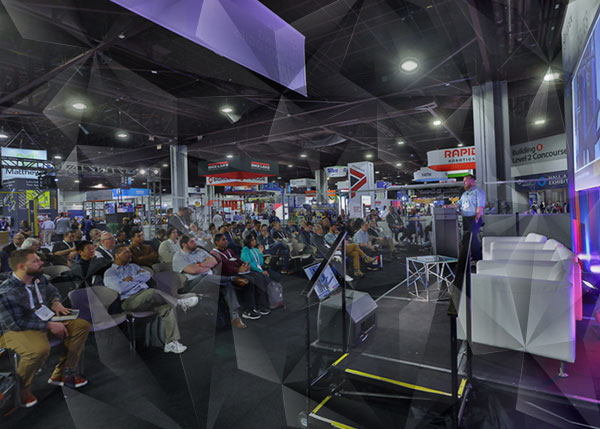
There are basically two types of exhibits: static and interactive. A static exhibit does not fully immerse or engage the visitor. An interactive exhibit immerses visitors in a multi-sensory experience. The more a visitor can see, hear, touch and interact with your product or services the more impact it will be.
Exhibit Surveys, an independent tradeshow and event research firm, found that 69% of attendees rate product demonstrations and stage/theatre presentations as a key factor in influencing exhibit memorability and recall.
Here are six tips to help you create a successful live presentation or demonstration:
- Develop content relevant to your target audience—Think about who your target audience is, what their top-of-mind concerns and priorities are, and how your product/service addresses those needs.
- Be creative—The creative approach should match your audience’s taste and your company’s brand.
- Remember the message—The creative concepts used should always further your key messages and never obscure them.
- Show, tell, prove and get them to participating in any way possible by pushing buttons, holding things, answering questions, seeing before and after images or anything else you can think of.
- Keep it short—7 minutes or less. Give them the buzz not every detail.
- Have a strong call to action and pull through to the rest of the booth
Jefferson Davis, president of Competitive Edge is known as the “Tradeshow Turnaround Artist".
Since 1991, his consulting and training services have helped clients improve their tradeshow performance and results. Mr. Davis is a featured presenter at the ShowPro Tradeshow Workshop. He can be reached at 704-814-7355 or Jefferson@tradeshowturnaround.com.